The number-one regret farmers tell us about a hay barn isn't the cost. It's the size. Specifically: it's almost always too short on the eave, and a row of bales narrower than they wished. Here's how we size hay barns at Greene Builds, and the numbers that drive every decision.
Start with the equipment, not the bales
A round bale is about 5 feet tall and 5–6 feet across. Stack three high and you're at 15 feet. Easy math. But you don't stack bales by hand — you stack them with a stacker, and a fully extended stacker is taller than the top of the bale. That's where most owners get caught.
Typical eave heights, by stacker class
- Compact / utility stacker (3-bale stack): 14 ft eave minimum, 15 ft preferred
- Standard round-bale stacker (3–4 bale stack): 16 ft eave minimum, 17 ft preferred
- Heavy commercial stacker (4–5 bale stack): 17 ft eave minimum, 18+ ft preferred
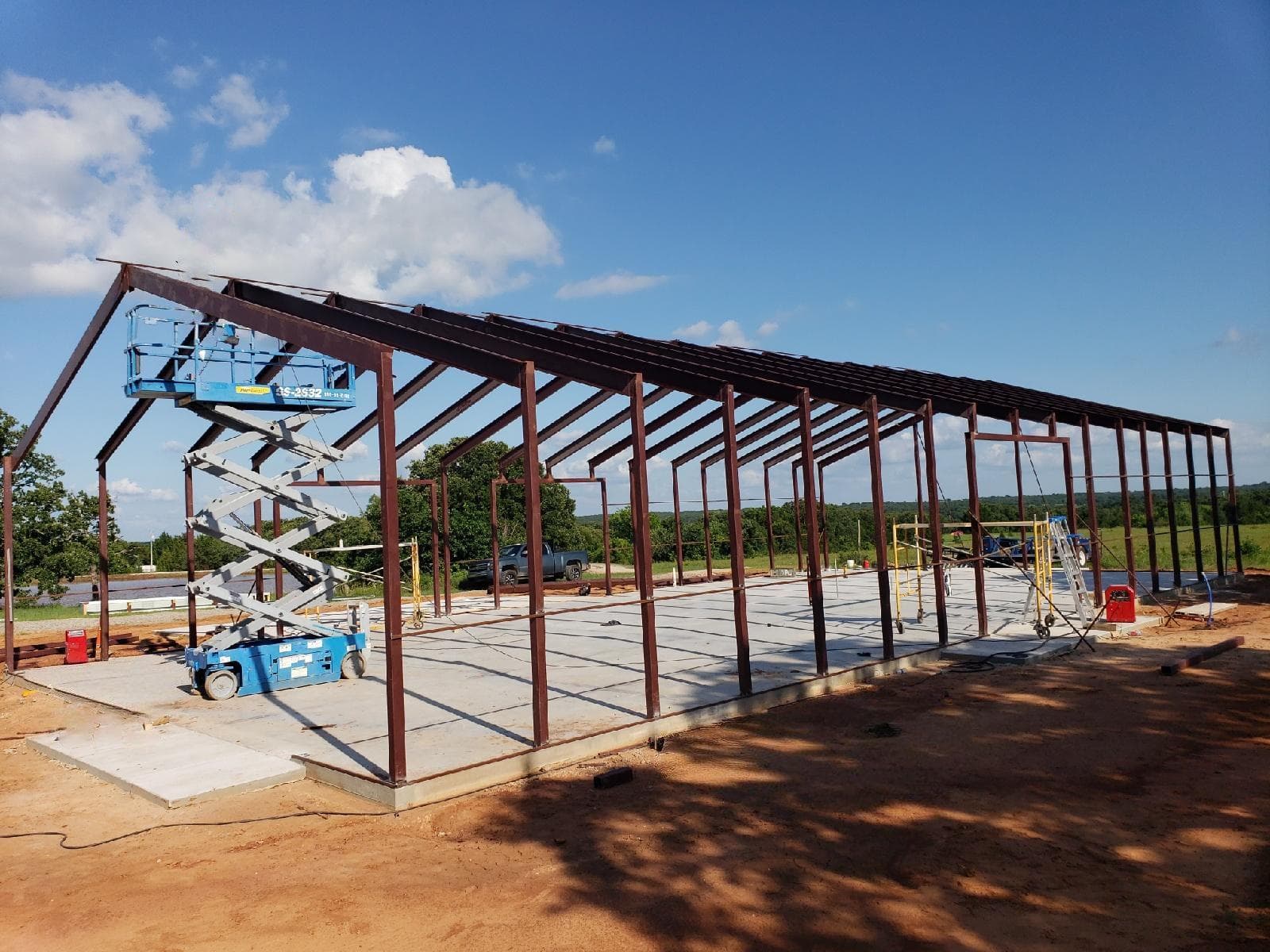
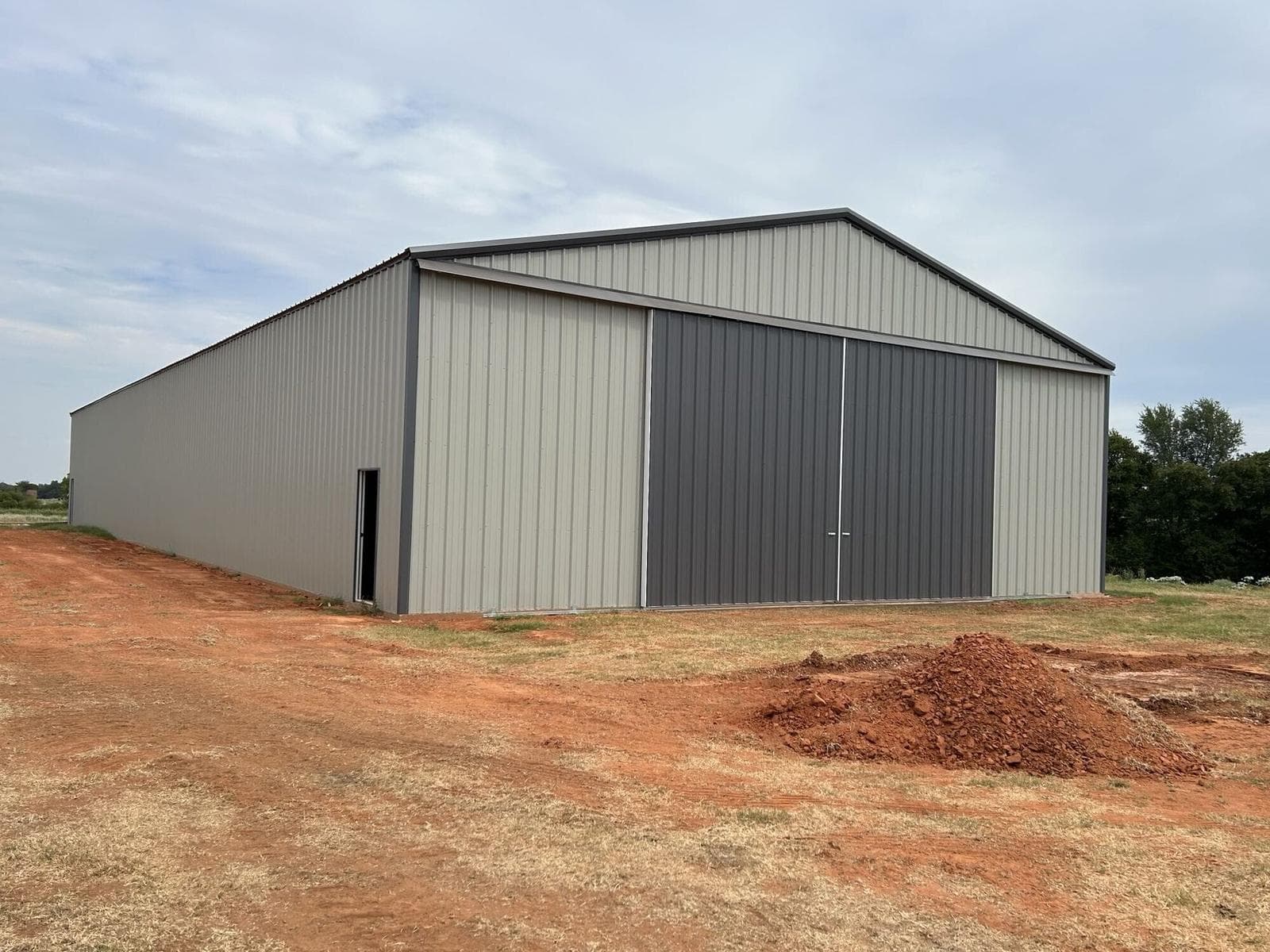
The El Reno hay barn we built recently is 55 × 150 × 17 — that 17-foot eave was sized exactly to clear the owner's stacker with a four-bale lift, plus the safe-clearance margin. Spec lower than that and you're either bending iron on the trusses or leaving the top bale outside.
How wide should the barn be?
Width is a function of how many bale rows you want, plus aisle space. A round bale takes about 6 feet of floor space. Three rows of stacked bales with a 12-ft aisle for the stacker to maneuver:
- Three-row barn: ~30 ft wide minimum (3 × 6 ft bales + 12 ft aisle)
- Four-row barn: ~36 ft wide
- Five-row barn: ~42 ft wide
Truss-frame buildings give us clean clear span up to 60 ft, which covers nearly any working hay barn. Beyond 60 ft, you're into rigid-frame I-beam territory.
Length is the cheapest dimension
Here's the part farmers underspec the most. Length doesn't cost much more once the frame system, the slab, and the foundation prep are committed. If you're debating 100 ft vs 120 ft, the upgrade is usually a small percentage of total cost — but the extra bale capacity pays for itself in one or two cuttings.
The three numbers we ask for at quote time
- How tall is your stacker fully extended with a top bale loaded?
- How many bale rows do you want under cover at peak season?
- How many years of hay are you trying to store?
Give us those three answers and we'll spec a barn that fits the work, not the brochure. The numbers tell us the eave, the width, and the length — and the rest is engineering.