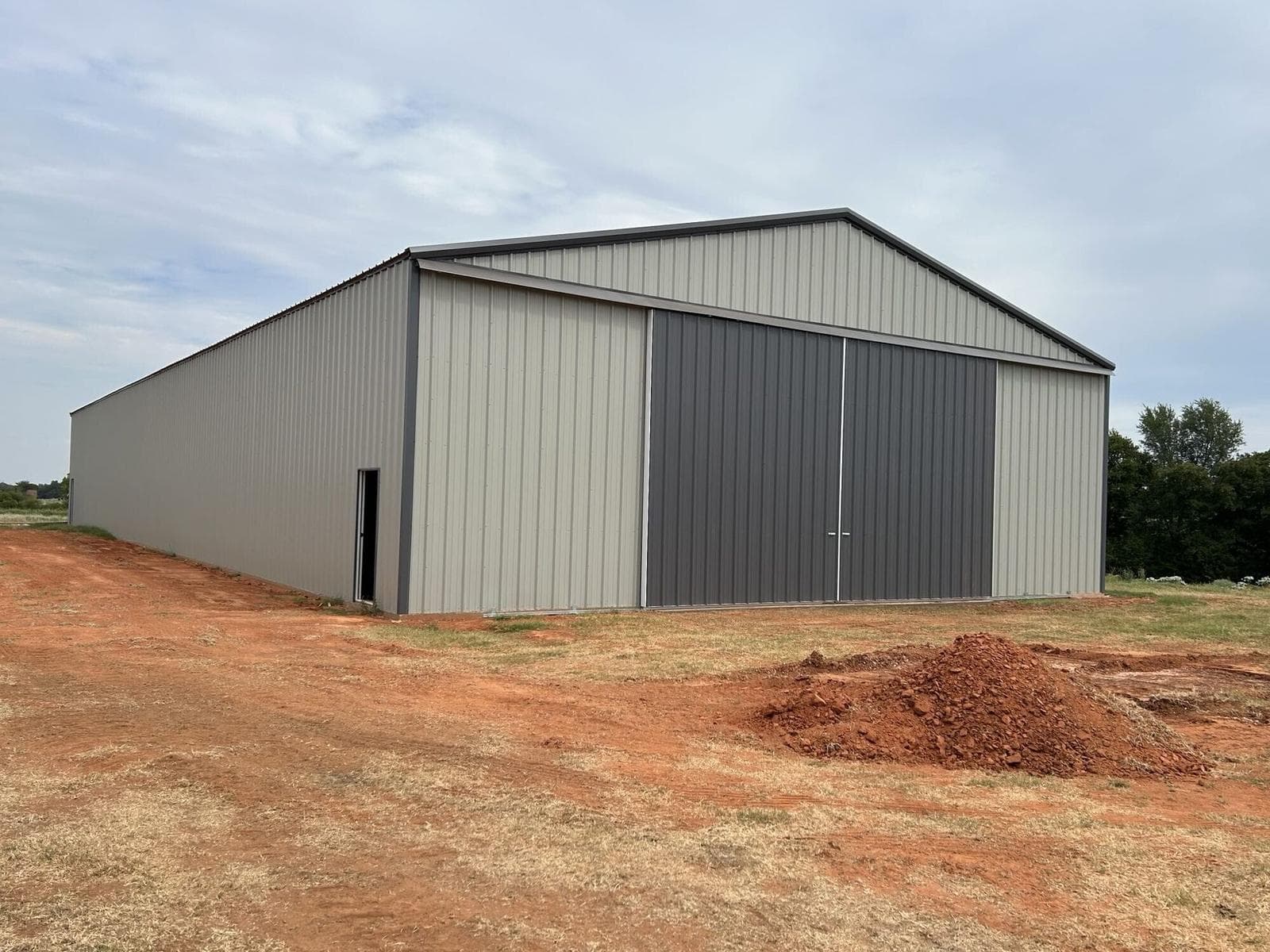
The IBC says most of central Oklahoma needs to be engineered to 90 mph design wind speed for low-occupancy farm structures. We build to 115. There's a reason — and it's not because we like to over-engineer for fun.
What the code actually says
ASCE 7, which the International Building Code references, divides the country into wind zones. Most of central Oklahoma sits in a 90–105 mph design wind speed band for what's called Risk Category I structures — agricultural buildings, isolated outbuildings, anything where a failure isn't a life-safety issue.
On paper, that means a hay barn with no one inside it overnight can be engineered to 90 mph and still pass inspection. And technically, it'll meet code. The question is whether "meets code" is the same as "will be standing in five years."
What actually happens in Oklahoma
Oklahoma sees straight-line winds in the 70–80 mph range several times a year. Strong thunderstorm gusts hit 90+ regularly. And every spring, a tornado warning band crosses someone's pasture. The 90-mph code number is a statistical baseline, not a ceiling.
Why we build to 115
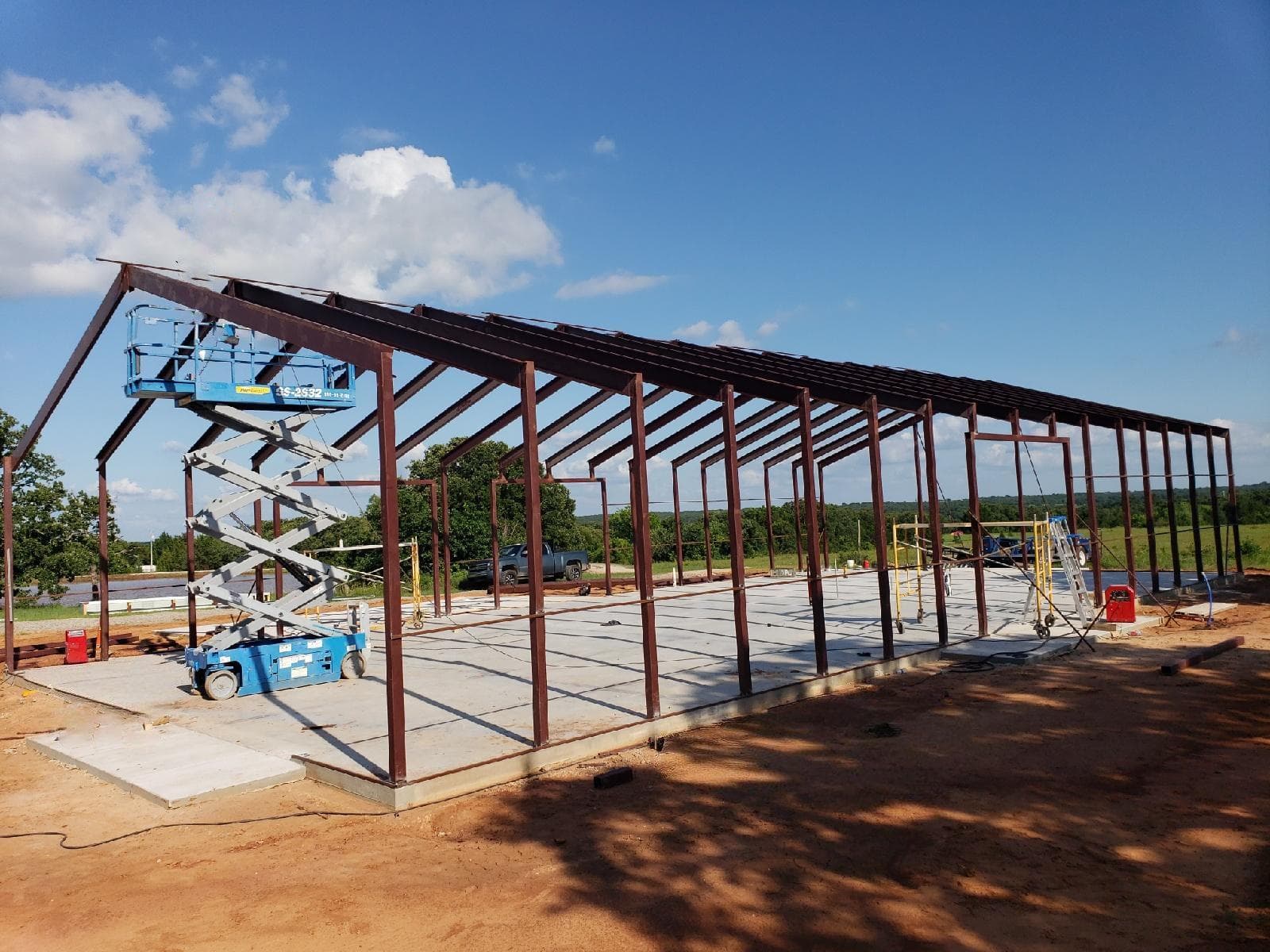
115 mph design wind speed gives meaningful margin above the gusts we see in a typical bad weather year, and survivable margin against the kind of straight-line wind events we see every few years. It also means the anchorage, the truss connections, and the wall bracing all step up — not just the panels.
The cost difference between 90 and 115 mph is real but modest — typically 4–8% of the structural budget, depending on the size of the building. For a 50 × 100 hay barn, that's a few thousand dollars on a project that costs many tens of thousands. Cheap insurance.
What 115 mph buys you
- Heavier anchor bolt embedment in the slab (more rebar, deeper sets)
- Larger gauge on the structural members at high-load points
- Tighter purlin spacing on the roof
- More fasteners per square foot on wall and roof panels
- Engineered uplift bracing at the eaves
When 115 still isn't enough
115 mph design speed protects you against the storm you'll probably see in this decade. It does not protect you against an EF-3 or stronger tornado directly hitting your barn — nothing rated as a Category I farm building will. If you're putting up something with valuable equipment, livestock, or living quarters inside, that's where we step up to a hardened spec or a basement-grade shelter inside the building.
We've watched a 40 × 80 horse barn in Lincoln County take a 95-mph straight-line wind and lose nothing but two roof panels. A neighbor's barn — built to code minimum a few years earlier — was a pile of metal in the same storm. The numbers aren't abstract here.