Every other client we quote a barndominium for asks the same question: "Is it really cheaper than a regular house?" The honest answer is: usually yes, sometimes by a lot, sometimes not at all — depending on what you're comparing and what you're calling "finished." Here's the real math on a recent 30 × 60 build, with all the numbers out in the open.
The reference build: 30 × 60 in Claremore
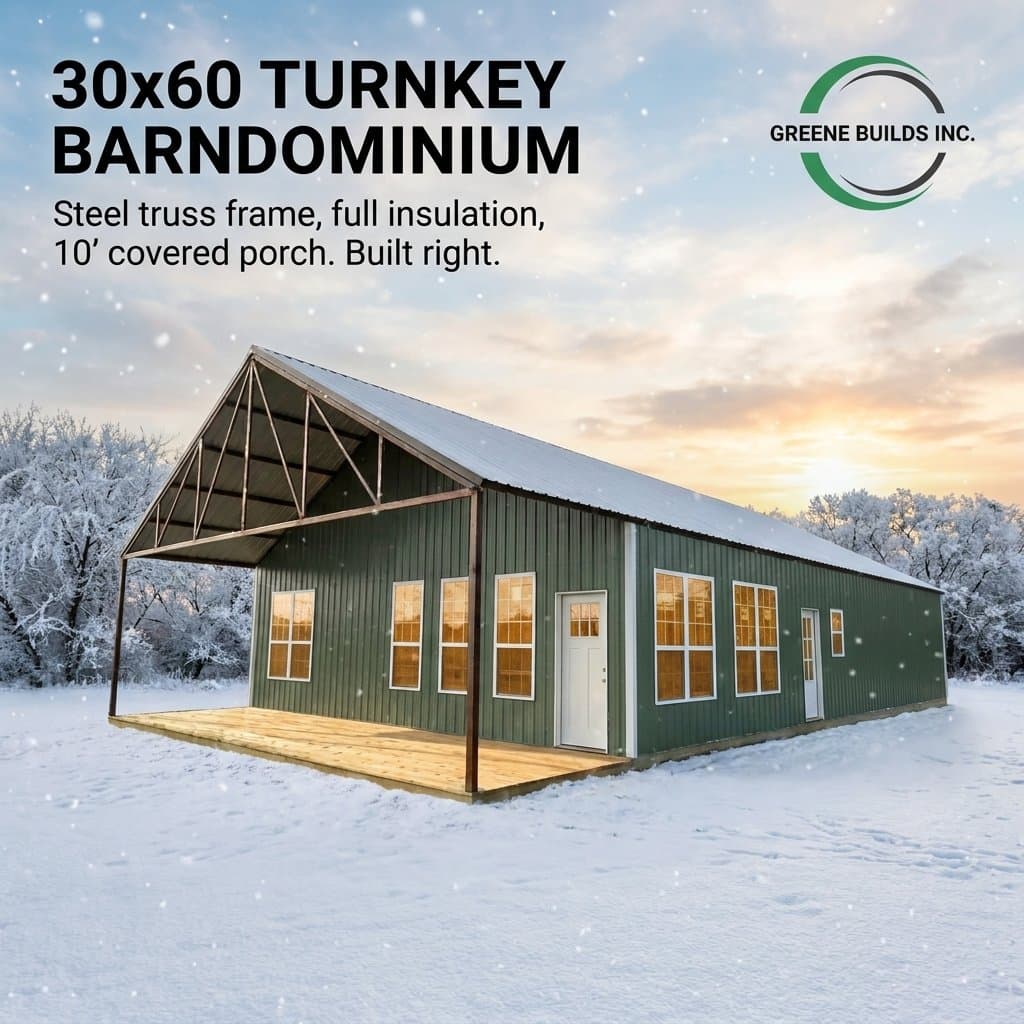
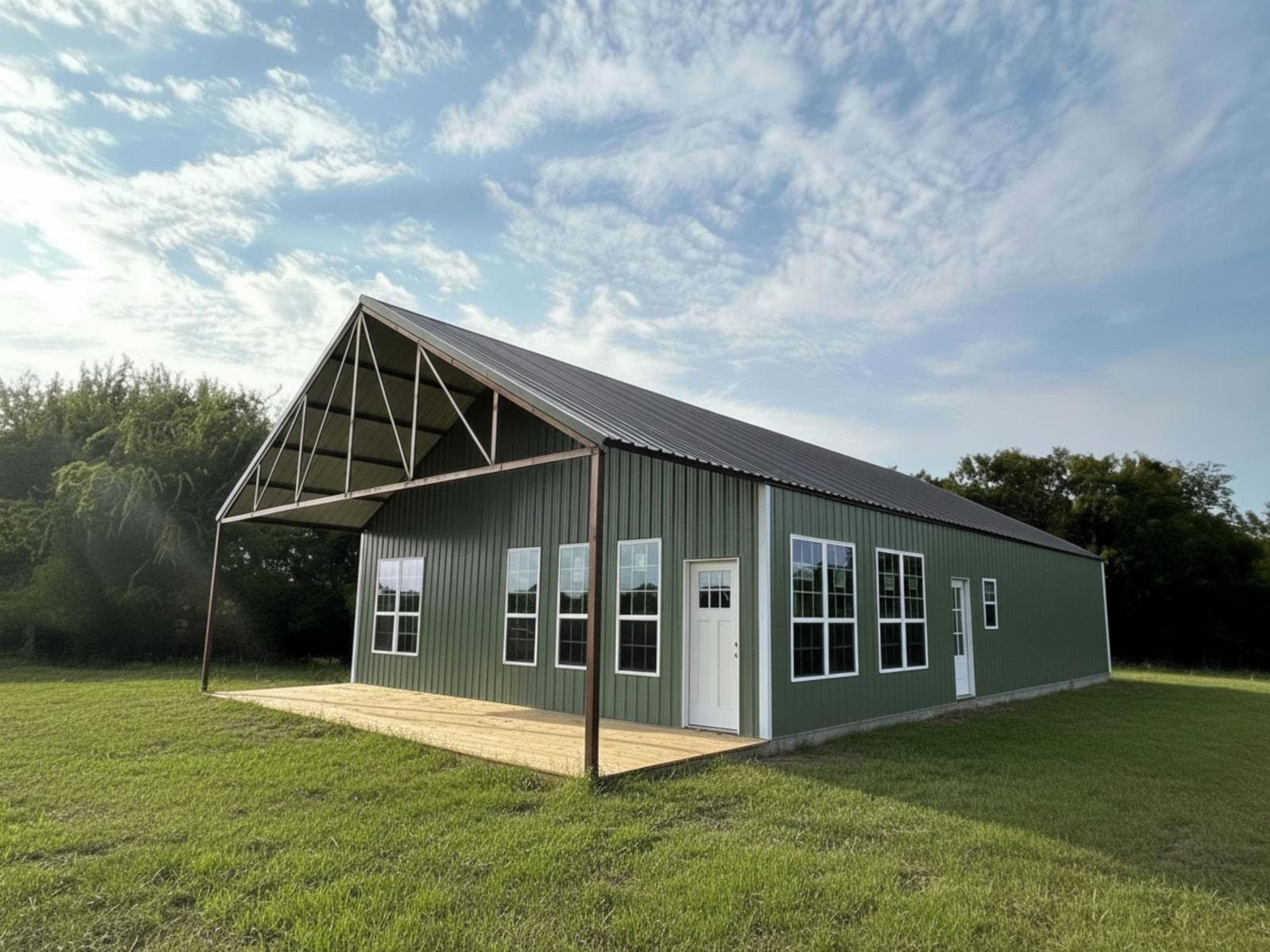
1,800 square feet of conditioned living space plus a 600 sq ft covered porch. Three bedrooms, two baths, an open kitchen-living layout. Steel truss frame, insulated wall and roof package, 4-inch monolithic slab, residential windows and doors, standard 26-gauge metal exterior in two colors.
What's included in our shell + dried-in package
- Site prep, grading, and compacted sub-base
- Monolithic 4" reinforced slab with rebar mat
- Steel truss frame, engineered for 115 mph wind
- 26-gauge roof and wall panels, two colors
- Full insulation package (walls, roof, perimeter slab)
- Doors and windows installed (residential-grade)
- Rough-in for plumbing and electric (final hookup by licensed trades)
- Covered porch with concrete and ceiling finish
The numbers (round figures, real project)
- Shell + dried-in (above scope): roughly $50–120 per sq ft of conditioned space, depending on size and complexity
- Owner-finished interior (DIY drywall, paint, trim, cabinets): adds $25–40 per sq ft
- Contractor-finished interior (custom kitchen, tile, premium finish): adds $60–135 per sq ft
- Total turnkey range: $140–255 per sq ft depending on finish level
Stick-built comparable in the same market
A comparable 1,800 sq ft single-story stick-frame home in rural Oklahoma is currently coming in around $200–280 per sq ft for new construction at standard finish levels. Some of that is land prep and foundation, some is the framing labor cost premium for stick construction, some is the design fee for a custom plan vs. our pre-engineered package.
Where the savings come from
- Pre-engineered shell vs. custom-drafted framing plans
- Faster erect time (one crew, 3–4 weeks for a typical 30×60 shell vs. 8–12 weeks for stick frame)
- Single-contractor coordination (we do the slab, shell, and insulation under one contract)
- No basement (most barndos are slab-on-grade, which is a major cost saver)
- Standardized doors and windows in a steel building's openings
Where the costs catch up
If you want a barndominium that feels exactly like a high-end suburban home — vaulted ceilings with crown molding, custom built-ins, premium fixtures throughout — you'll pay almost as much per square foot as a stick build at that finish level. The shell savings are real, but interior finish is interior finish regardless of what's behind the drywall.
Where barndominiums genuinely win
- Attached shop or garage bay under the same roof — almost free vs. a detached structure
- Open clear-span interior layouts (no load-bearing walls to work around)
- Future expansion is cheap — pre-engineer the frame, bolt the addition on later
- Lower long-term maintenance (steel exterior, simpler roofline)
- Easier to finance as a single project through HFS than as house + detached shop separately
The takeaway
If you want a livable, finished home on your land for less money, faster, and with an attached shop — a barndominium is a serious win. If you're chasing a magazine-cover custom kitchen with vaulted ceilings, the shell type matters less than the finish budget.
We'll quote either side honestly, and we won't pressure you toward the barndo if a stick build makes more sense for what you actually want. Call the shop and we'll walk through your specific numbers.